Carpeting and Flooring: A Practical Guide for Commercial Spaces
Few
decisions shape the look and feel of a commercial interior as much as the floor
beneath your feet. Whether you're renovating an office, outfitting a retail
space, or finishing out a healthcare facility, choosing the right carpeting and
flooring isn't just a design decision — it affects durability, maintenance
costs, acoustics, and even employee comfort. In this guide, we'll walk through
the main options available, what to consider before you choose, and how a
partner like Bates Interior Solutions can help you get it right the
first time.
Why Carpeting and Flooring Choices Matter More
Than You Think
It's
easy to treat flooring as a final-stage decision, something to pick once the
walls are painted and the furniture is ordered. But carpeting and flooring choices
actually influence:
- Acoustics — carpet absorbs sound, while
hard surfaces reflect it, changing how a space feels and functions
- Maintenance
costs — some
materials require frequent cleaning or refinishing, others are nearly
maintenance-free
- Durability — high-traffic areas need
materials rated for heavy wear, while low-traffic spaces have more
flexibility
- Indoor air
quality — flooring
materials and adhesives can affect off-gassing and allergens
- Brand image — the right flooring reinforces
your company's aesthetic, whether that's polished and corporate or warm
and welcoming
Getting
this decision right upfront saves significant time and money down the road.
Common Carpeting and Flooring Options for
Commercial Spaces
Carpet Tile
Carpet
tile is a popular choice for offices because it's easy to replace section by
section, hides seams well, and comes in a huge range of colors and patterns. It
also offers strong acoustic performance, which matters in open-plan layouts.
Broadloom Carpet
Broadloom
carpet provides a seamless, wall-to-wall look that works well in conference
rooms, executive offices, and hospitality settings where a more luxurious feel
is desired.
Luxury Vinyl Tile (LVT) and Plank (LVP)
LVT
and LVP mimic the look of hardwood or stone while offering superior water
resistance and durability — a strong fit for healthcare, retail, and
high-traffic corridors.
Polished Concrete
For
a modern, industrial aesthetic with minimal maintenance, polished concrete is
increasingly popular in retail and creative office spaces.
Hardwood and Engineered Wood
Warm
and timeless, wood flooring is often used in lobbies, executive suites, and
hospitality environments where a premium look is a priority.
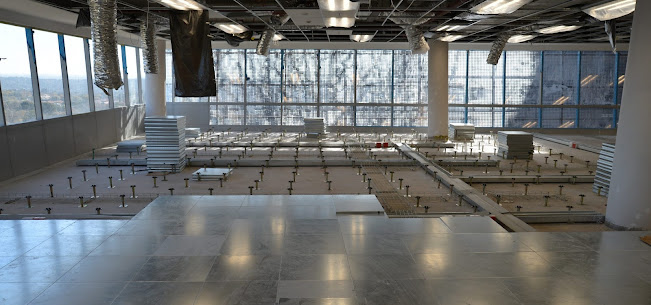
Raised Access Flooring with Carpet Finish
In
spaces that need under-floor cable management — like data centers or tech-heavy
offices — carpeted access flooring combines functionality with a finished,
professional appearance.
Key Factors to Consider Before Choosing
- Traffic
levels — how many
people will walk this floor daily, and what kind of wear should it
withstand?
- Budget — both upfront material costs
and long-term maintenance expenses
- Sustainability
goals — recycled
content, low-VOC materials, and certifications like LEED
- Installation
timeline — some
materials install faster than others, which matters for tight renovation
schedules
- Design
cohesion — how the
flooring ties into the broader interior design plan
How Bates Interior Solutions Helps Get It
Right
Choosing
among the many carpeting and flooring options available can feel overwhelming,
especially when balancing budget, design, and performance requirements. Bates
Interior Solutions works with businesses to simplify that process by
offering:
- Guidance on
selecting materials suited to each space's traffic level and function
- Access to a
wide range of carpet, tile, vinyl, wood, and specialty flooring products
- Coordination
of installation timelines alongside broader renovation or build-out
projects
- Design input
to ensure flooring choices align with the overall interior vision
- Post-installation
support, including maintenance guidance and repairs
Rather
than treating flooring as a standalone purchase, Bates Interior Solutions
approaches it as part of the bigger picture — making sure every material choice
supports both the function and the feel of the finished space.
Questions to Ask Before You Commit
- What traffic
level and wear rating does this space actually need?
- Are there
acoustic or air quality requirements to factor in?
- What's the
expected lifespan and maintenance routine for each material option?
- How does the
installation timeline fit into the rest of the project?
- What
warranty coverage comes with the product and installation?
A
flooring partner who can answer these clearly is one you can trust to guide a
larger renovation or build-out project.
Final Thoughts
Carpeting
and flooring decisions carry more weight than they're often given credit for —
shaping everything from acoustics to long-term maintenance costs. Taking the
time to evaluate your options against your space's actual needs pays off well
beyond the installation date. Working with an experienced partner like Bates
Interior Solutions ensures those decisions are made with both function and
design in mind, resulting in a space that performs well and looks great for
years to come.

Comments
Post a Comment